
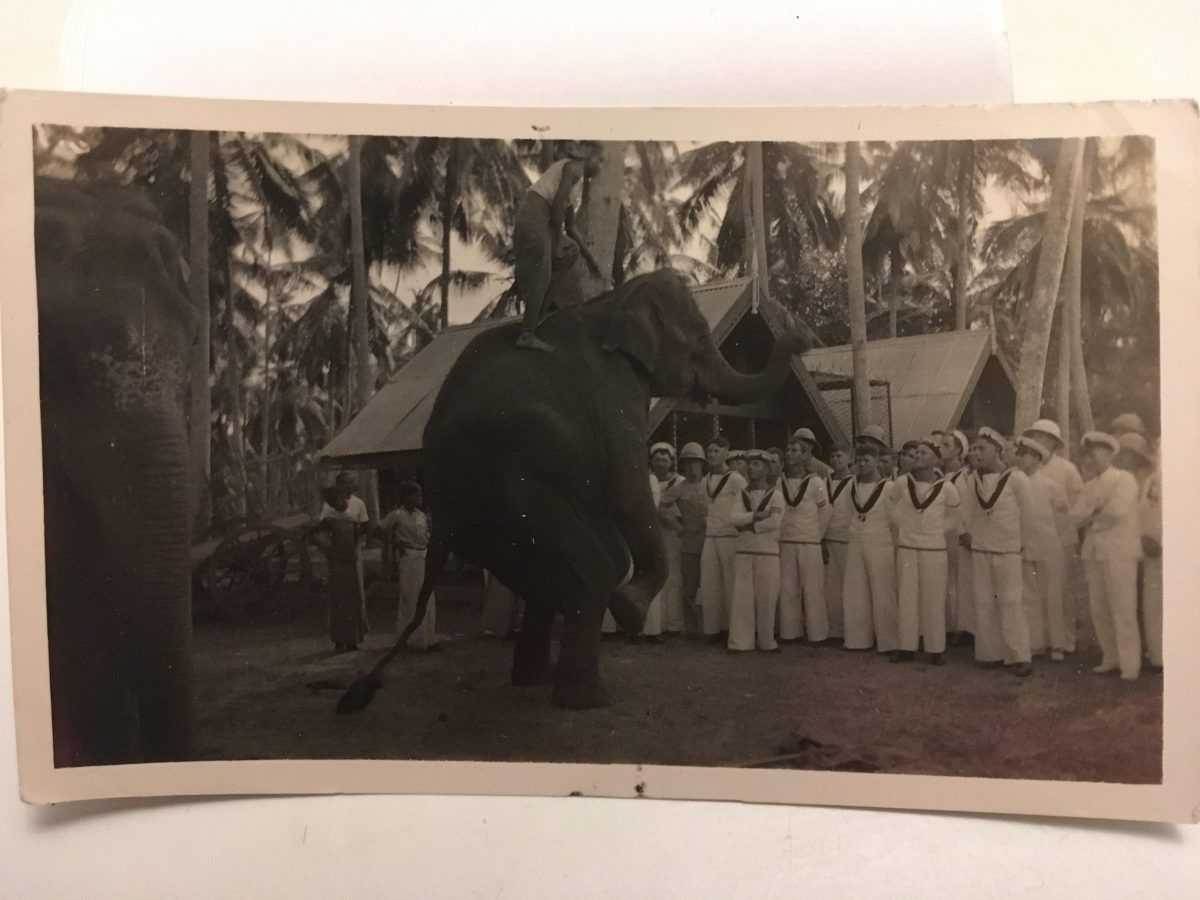
It’s been a funny few weeks. Having moved back to freelance life after a decade of commissioning, I’ve been frantically busy, but I’ve also found a few spare moments to embark on the long-overlooked task of sorting through the piles of stuff that came to me when my grandparents passed away. Only a few days in, amongst the boxes of dusty postcards and family snaps, I found treasure – my grandfather’s naval records from the 1920s and 1930s, including photos from his time in Ceylon.
Since gaining independence in 1948 and rebranding itself as Sri Lanka in 1972, the island formerly known as Ceylon has seen seismic changes – literally in the case of the deadly tsunami that struck the eastern and southern coastlines in 2004. The self-described Pearl of the Orient has been gripped by civil war and upheaval. It has been changed dramatically by tourism and runaway modernisation. But flicking through my grandad’s cigarette card-sized, black-and-white photographs, I was struck not just by what has changed, but also by what has stayed the same.
Discovering this time capsule came at a serendipitous time – I’m poised to start work on a series of articles about Sri Lanka, part of a push to remind people that this spectacular, complex destination is still open for business, and in urgent need of support from international tourists to help the economy rebuild after the terrorist attacks on 21 April 2019.
On a personal note though, these frozens moments in time just reinforced my belief that I was born in the wrong era, and should rightly have done my travelling in the interwar years, to a backdrop of gypsy jazz beneath whirling ceiling fans, when the world was still fresh and waiting to be discovered.

The photographs create a patchy record, taken on moments of shore leave between naval engagements, but they paint an evocative picture of Sri Lanka before foreign travel for the masses became a reality. Some iconic landmarks from 1928 are still standing today, like the former General Post Office on Janadhipathi Mawatha in Fort, returned to its original 1890s brilliance following a major restoration in 2016. The only thing that has conspicuously changed is the addition of some greenery along the facade, and a more modern fleet of motor vehicles lined up out front.

Other areas of Sri Lankan life have changed beyond recognition. Covered bullock carts once transported goods right into the heart of the capital, vastly outnumbering the handful of automobiles that plied the streets of the British-era Fort. Today, Colombo is a frantic, modern motor city, and ox-carts have been relegated to the countryside, if they are seen at all. It must have been quite something to experience Colombo when cars were rare and the air was clean, free from the noise and diesel pollution that characterises the city today.

I was also struck by the realisation that the interwar years were, for the British working classes, a time of opportunity, before the gathering storm clouds of the Second World War became fully apparent. The old cliche of ‘Join the Navy, see the world’ was a genuine proposition. For my grandfather, raised in a back-to-back terraced house in the Midlands, enlisting as a navy stoker was an opportunity to not just leave England for the first time, but to literally circle the globe – or at least the bits of it allied to the British Empire.
His travels took him to Scarpa Flow in Scotland, and on to Malta, Suez, Aden, Bombay, Ceylon, Kolkata, Malaya, Singapore, Hong Kong and finally mainland China and Japan. At that time, this was an experience only open to multi-millionaires, merchant seamen, or the enlisted men of the Royal Navy. When conflict finally broke out, my grandfather’s war was spent not on the battlefields of Europe, but patrolling the Yangtze River under Japanese fire, as violence spread out to the Pacific.
There’s a powerful sense of time and place in these pictures of sailors and elephants. Despite the obvious gap in wealth between the British overlords of Ceylon and the local population, the experience back home for most of the sailors in my grandad’s unit was not all that different to that of the Sri Lankans they were meeting for the first time. Both lived with limited means, beholden to hierachies of class, wealth, rank and power they had little ability to influence or control.

Nevertheless, there was time for leisure – another comparatively new development for the working classes – while on shore leave, as demonstrated by this brochure on the dagobas (stupas) of Sri Lanka’s ancient cities, printed in 1928 and found in almost mint condition amongst my grandad’s naval papers. Tourism is, of course, as old as the hills, but there was a time when the world’s most famous sights were full of local people going about their business, rather than crowds of tourists snapping selfies.
I’ll write another day about my grandad’s war experiences, and his near miss in the Panay incident that dragged America into war with Japan, but one paper found amongst his naval files had a particular resonance: a notification of the declaration of war from 3rd September 1939.

It’s hard to imagine what goes through your mind when instructed, on pain of court-martial, to immediately start fighting people you have never met, over politics you know nothing about, because of a crisis you played no part in creating. It’s even harder to imagine what that would mean to someone thousands of miles from a war unfolding on the doorstep of the family and home they left behind.
Привет всем!
Гнездная алопеция у женщин требует точной диагностики и определения факторов, влияющих на выпадение волос. Спектральный анализ позволяет выяснить, каких микроэлементов не хватает для нормального роста волос. Алопеция что это у женщин причины, кроется в гормональных изменениях или аутоиммунных нарушениях. Лечение алопеции включает индивидуально подобранные препараты и методы. Алопеция у женщин причины и лечение обсуждаются с трихологом.
Алопеция у детей причины — это выпадение волос у детей, которое может быть вызвано стрессом, дефицитом питательных веществ или аутоиммунными заболеваниями. Спектральный анализ волос позволяет выявить дефицит таких элементов, как витамины группы B и витамин D. Лечение алопеции у детей требует внимательного подхода и индивидуального выбора препаратов и витаминов.
Более подробно в обзоре – https://dzen.ru/a/Z0CmGbmkTQ8F3dyA
шампунь при алопеции у шпица, масло усьмы при алопеции, алопеция чем опасна, алопеция передается по наследству или нет
алопеция гнездная у собак, алопеция у женщин причины и лечение что это фото, алопеция шпица, лечение алопеции у женщин отзывы очаговой форум
Удачи!
Здравствуйте!
Алопеция у мужчин на голове — это потеря волос на лбу и висках, что связано с андрогенной алопецией. Спектральный анализ волос помогает выявить дефицит микроэлементов, таких как медь и цинк. Лечение включает гормональные препараты, наружные средства и стимуляторы роста волос.
Гнездная алопеция у детей — это одно из редких заболеваний, которое проявляется выпадением волос в виде округлых очагов. Спектральный анализ волос может помочь выявить скрытые причины заболевания, включая дефицит микроэлементов. Лечение гнездной алопеции у детей зависит от того, что именно вызывает заболевание. Алопеция у детей причины могут быть связаны с нарушениями в иммунной системе. Что такое алопеция у детей, важно выяснить как можно раньше для начала эффективного лечения.
Более подробно в обзоре – https://dzen.ru/a/Z0CmGbmkTQ8F3dyA/
средство от алопеции для женщин, скрыть алопецию у женщин как, как лечить андрогенную алопецию у женщин успешно отзывы, алопеция приобретенная или врожденная
алопеция во время беременности, алопеция анализы, у ребенка алопеция гнездная, алопеция лечение отзывы
Удачи!
Доброго!
Алопеция у женщин это что, объясняет врач после обследования и анализа причин. Спектральный анализ волос выявляет минералы, влияющие на состояние волос. Очаговая алопеция у женщин причины включает хронический стресс и аутоиммунные заболевания. Лечение алопеции основано на комплексном подходе, включающем диету и уход за волосами. Что такое алопеция у женщин, можно понять, зная её симптомы и факторы риска.
Что такое алопеция у женщин — это заболевание, при котором происходит выпадение волос по различным причинам. Среди них могут быть стресс, гормональные изменения или дефицит витаминов. Спектральный анализ волос позволяет выявить дефицит микроэлементов, таких как магний, которые могут повлиять на здоровье волос. Лечение алопеции у женщин включает комплексный подход, включая витаминные комплексы и наружные препараты.
Более подробно в обзоре
http://railian.com/Zpravodaj_2014/brezen.php
http://mrleroi.com/2019/10/26/featured-post/?unapproved=435363&moderation-hash=fbf588386bfb4265b543ebe4d14565f5#comment-435363
Удачи!
Доброго!
Алопеция у кошек — это выпадение шерсти у домашних животных, которое может быть вызвано аллергиями, инфекциями или стрессом. Спектральный анализ шерсти помогает определить дефицит витаминов и минералов, таких как омега-3 жирные кислоты и магний. Лечение алопеции у кошек включает использование специализированных кормов и препаратов, которые помогают восстановить шерсть.
Гнездная алопеция это заболевание, при котором волосы выпадают очагами, образуя “гнёзда”. Спектральный анализ волос помогает понять, какие микроэлементы важны для восстановления. Алопеция что это у женщин, связано с генетикой или аутоиммунными процессами. Лечение алопеции основано на восстановлении работы иммунной системы. Что такое алопеция у женщин, зависит от формы заболевания и её причин.
Более подробно в обзоре
https://blog.webit.ru/google-adwords-chto-eto-takoe-i-kak-s-nim-rabotat/?unapproved=140095&moderation-hash=591b9571835f89dfa63e7e0f1fd1dde3#comment-140095
https://www.steedconsulting.co.uk/steed/building-psychological-safe-cultures-in-primary-care/#comment-29582
Удачи!
Привет всем!
Алопеция у женщин фото — это наглядная демонстрация различных форм выпадения волос у женщин. Спектральный анализ волос помогает определить дефицит микроэлементов, таких как цинк и селен, что может способствовать выпадению волос. Лечение алопеции у женщин на основе анализа волос может включать витаминные комплексы, наружные средства и терапию для восстановления нормального роста волос.
Тотальная алопеция у женщин — это форма заболевания, при которой волосы выпадают по всей голове. Причины тотальной алопеции могут быть связаны с аутоиммунными заболеваниями, гормональными изменениями или стрессами. Спектральный анализ волос позволяет определить, какие элементы не хватает организму для восстановления волос. Лечение тотальной алопеции требует комплексного подхода и может включать как медикаментозные препараты, так и физиотерапевтические методы. Очень важно начать лечение на ранней стадии заболевания.
Более подробно в обзоре
https://www.natur-elle.in/all-the-scary-ways-to-do-massage/#comment-35693
http://xf2.xenbulletins.com/index.php?threads/how-spiritual-nationalism-can-solve-india%E2%80%99s-ongoing-political-crisis-%E2%80%93-youth-ki-awaaz.4745/page-310#post-173123
Удачи!
Доброго!
Диффузная алопеция у женщин — это постепенное выпадение волос по всей голове. Причины диффузной алопеции могут быть связаны с дефицитом витаминов, гормональными сбоями или стрессом. Спектральный анализ волос позволяет точно выявить дефицит микроэлементов, который может стать причиной потери волос. Лечение диффузной алопеции у женщин включает в себя восстановление питания волос и нормализацию обмена веществ. Этот процесс требует комплексного подхода и терпения.
Тотальная алопеция это редкое заболевание, характеризующееся полной потерей волос. Спектральный анализ волос помогает выявить скрытые дефициты элементов, влияющих на здоровье кожи головы. Что такое тотальная алопеция у женщин, часто связано с тяжёлыми аутоиммунными процессами. Лечение алопеции требует комплексного подхода и работы с иммунной системой. Алопеция у женщин это что такое причины, можно выяснить с помощью обследования.
Более подробно в обзоре
https://www.soccer-warriors.de/es-gibt-dinge-die-kann-man-nicht-kaufen/#comment-100297
https://hespel.fr/?page_id=7&contact-form-id=7&contact-form-sent=93308&contact-form-hash=784f9382156ed25a9f0b94102a68cccf0240c765&_wpnonce=201097d539
Удачи!