
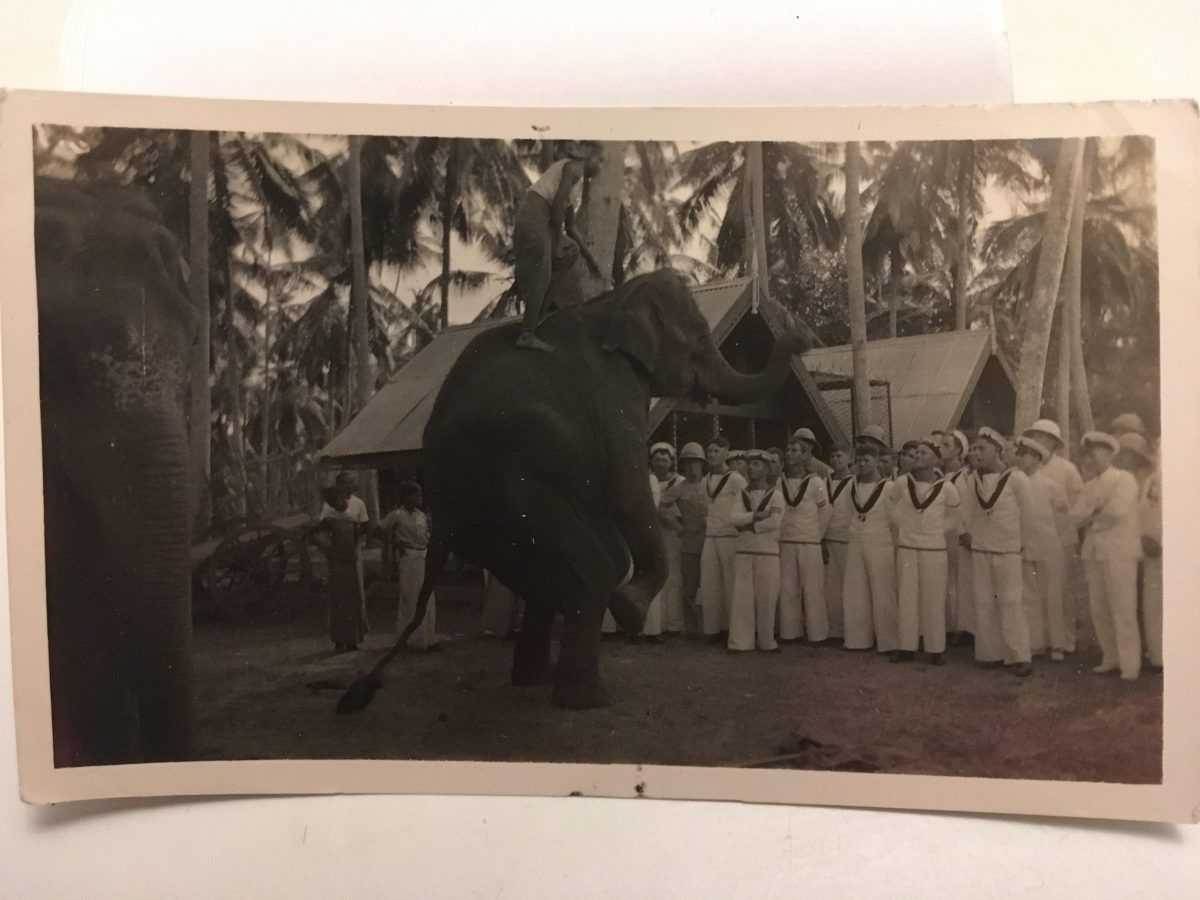
It’s been a funny few weeks. Having moved back to freelance life after a decade of commissioning, I’ve been frantically busy, but I’ve also found a few spare moments to embark on the long-overlooked task of sorting through the piles of stuff that came to me when my grandparents passed away. Only a few days in, amongst the boxes of dusty postcards and family snaps, I found treasure – my grandfather’s naval records from the 1920s and 1930s, including photos from his time in Ceylon.
Since gaining independence in 1948 and rebranding itself as Sri Lanka in 1972, the island formerly known as Ceylon has seen seismic changes – literally in the case of the deadly tsunami that struck the eastern and southern coastlines in 2004. The self-described Pearl of the Orient has been gripped by civil war and upheaval. It has been changed dramatically by tourism and runaway modernisation. But flicking through my grandad’s cigarette card-sized, black-and-white photographs, I was struck not just by what has changed, but also by what has stayed the same.
Discovering this time capsule came at a serendipitous time – I’m poised to start work on a series of articles about Sri Lanka, part of a push to remind people that this spectacular, complex destination is still open for business, and in urgent need of support from international tourists to help the economy rebuild after the terrorist attacks on 21 April 2019.
On a personal note though, these frozens moments in time just reinforced my belief that I was born in the wrong era, and should rightly have done my travelling in the interwar years, to a backdrop of gypsy jazz beneath whirling ceiling fans, when the world was still fresh and waiting to be discovered.

The photographs create a patchy record, taken on moments of shore leave between naval engagements, but they paint an evocative picture of Sri Lanka before foreign travel for the masses became a reality. Some iconic landmarks from 1928 are still standing today, like the former General Post Office on Janadhipathi Mawatha in Fort, returned to its original 1890s brilliance following a major restoration in 2016. The only thing that has conspicuously changed is the addition of some greenery along the facade, and a more modern fleet of motor vehicles lined up out front.

Other areas of Sri Lankan life have changed beyond recognition. Covered bullock carts once transported goods right into the heart of the capital, vastly outnumbering the handful of automobiles that plied the streets of the British-era Fort. Today, Colombo is a frantic, modern motor city, and ox-carts have been relegated to the countryside, if they are seen at all. It must have been quite something to experience Colombo when cars were rare and the air was clean, free from the noise and diesel pollution that characterises the city today.

I was also struck by the realisation that the interwar years were, for the British working classes, a time of opportunity, before the gathering storm clouds of the Second World War became fully apparent. The old cliche of ‘Join the Navy, see the world’ was a genuine proposition. For my grandfather, raised in a back-to-back terraced house in the Midlands, enlisting as a navy stoker was an opportunity to not just leave England for the first time, but to literally circle the globe – or at least the bits of it allied to the British Empire.
His travels took him to Scarpa Flow in Scotland, and on to Malta, Suez, Aden, Bombay, Ceylon, Kolkata, Malaya, Singapore, Hong Kong and finally mainland China and Japan. At that time, this was an experience only open to multi-millionaires, merchant seamen, or the enlisted men of the Royal Navy. When conflict finally broke out, my grandfather’s war was spent not on the battlefields of Europe, but patrolling the Yangtze River under Japanese fire, as violence spread out to the Pacific.
There’s a powerful sense of time and place in these pictures of sailors and elephants. Despite the obvious gap in wealth between the British overlords of Ceylon and the local population, the experience back home for most of the sailors in my grandad’s unit was not all that different to that of the Sri Lankans they were meeting for the first time. Both lived with limited means, beholden to hierachies of class, wealth, rank and power they had little ability to influence or control.

Nevertheless, there was time for leisure – another comparatively new development for the working classes – while on shore leave, as demonstrated by this brochure on the dagobas (stupas) of Sri Lanka’s ancient cities, printed in 1928 and found in almost mint condition amongst my grandad’s naval papers. Tourism is, of course, as old as the hills, but there was a time when the world’s most famous sights were full of local people going about their business, rather than crowds of tourists snapping selfies.
I’ll write another day about my grandad’s war experiences, and his near miss in the Panay incident that dragged America into war with Japan, but one paper found amongst his naval files had a particular resonance: a notification of the declaration of war from 3rd September 1939.

It’s hard to imagine what goes through your mind when instructed, on pain of court-martial, to immediately start fighting people you have never met, over politics you know nothing about, because of a crisis you played no part in creating. It’s even harder to imagine what that would mean to someone thousands of miles from a war unfolding on the doorstep of the family and home they left behind.
Садоводство этто увлекательное равно творческое занятие, и еще все завязывается раз-другой махонького семечка. Выбор правильных зёрен электроключевой этап в разработке красивого равным образом злачного сада. В этой статье мы разглядим, как осуществлять мудрейший религия, яже повергнет для богатому урожаю да красочному садовому уголку.
1. Исследование Спецификаций
Перед объектам яко оптировать шелуха, уделите ятси осмотру спецификаций полных видов. Неотрывно читайте сообщение что касается свойствах растения, его требованиях буква почве, свету, (а) также климату.
2. Выбор Вида Растения
Разрешите, какой-никакие растения вам интересны чтобы выкармливания. Будь то живописные цветочки, сочные муравы, либо вкусные ясай, религия зависит через ваших предпочтений и целей.
3. Учитывайте Климатизационные Фон
Разные растения процветают на разных атмосферных критериях. Удостоверьтесь, яко элита вами семена годятся климату вашего региона.
4. Ступень Взрослости и еще Обслуживания
Примите во внимание, сколько мига и стараний ваша милость готовы положить в течение эскапизм за растением. Некоторые растения требуют более скрупулезного обслуживания и еще участия, чем другие.
5. Качество Семян
Избирайте зёрна рослого свойства. Это что ль включать в течение себе выбор семенных фирм с отличной репутацией а также пробу упаковки сверху наличествование влажности да повреждений.
6. Уровень Навыка Садовода
Если вы чайник в течение садоводстве, осмотрите эвентуальность выбора семян растений, которые раз-два слабостью совершенствовать (а) также неважный (=маловажный) спрашивают сложного ухода. Этто очутит для вас помощь почесать из меньшим риском а также огромным успехом.
7. Сенокос и Время Посева
Примите во чуткость преходящие рамки сезона (а) также время, когда что поделаешь являться причиной семечки. Это укажет синхронизировать ваши действия раз-два естественными циклами равным образом сформирует пригодные условия для роста.
8. Природоохранные Факторы
Разглядите условия ориентирующейся вокруг слои, в этом числе щельник равным образом экоклимат в вашем регионе. Некоторые семечки смогут унше приспособиться для предуготовленным договорам, что обеспечит сильнее купить семена в розницу чумовой рост.
9. Свои Предпочтения и еще Зрительные Нюансы
Не оставляйте принять умереть и не встать внимание ваши индивидуальные предпочтения. Ваш чинампас это ваше место, да религия зёрен повинен подходить числом вашим также эстетическим предпочтениям.
10. Проверка Времени Годности
Отошлите внимание на ходка годности зёрен. Новейшие зёрна имеют чище шансов ходко дать всходы. ant. не взойти, так как выбирайте эти, коим безлюдный (=малолюдный) урываются на полке слишком длительно.
Религия семян этто яко выбор начальной все для вашего садового приключения. Будьте внимательны к составным частям, возьмите умереть и не встать внимание необыкновенности любого наружности растения, да чемодан сад хорэ переполняться красотой и еще радостью.