
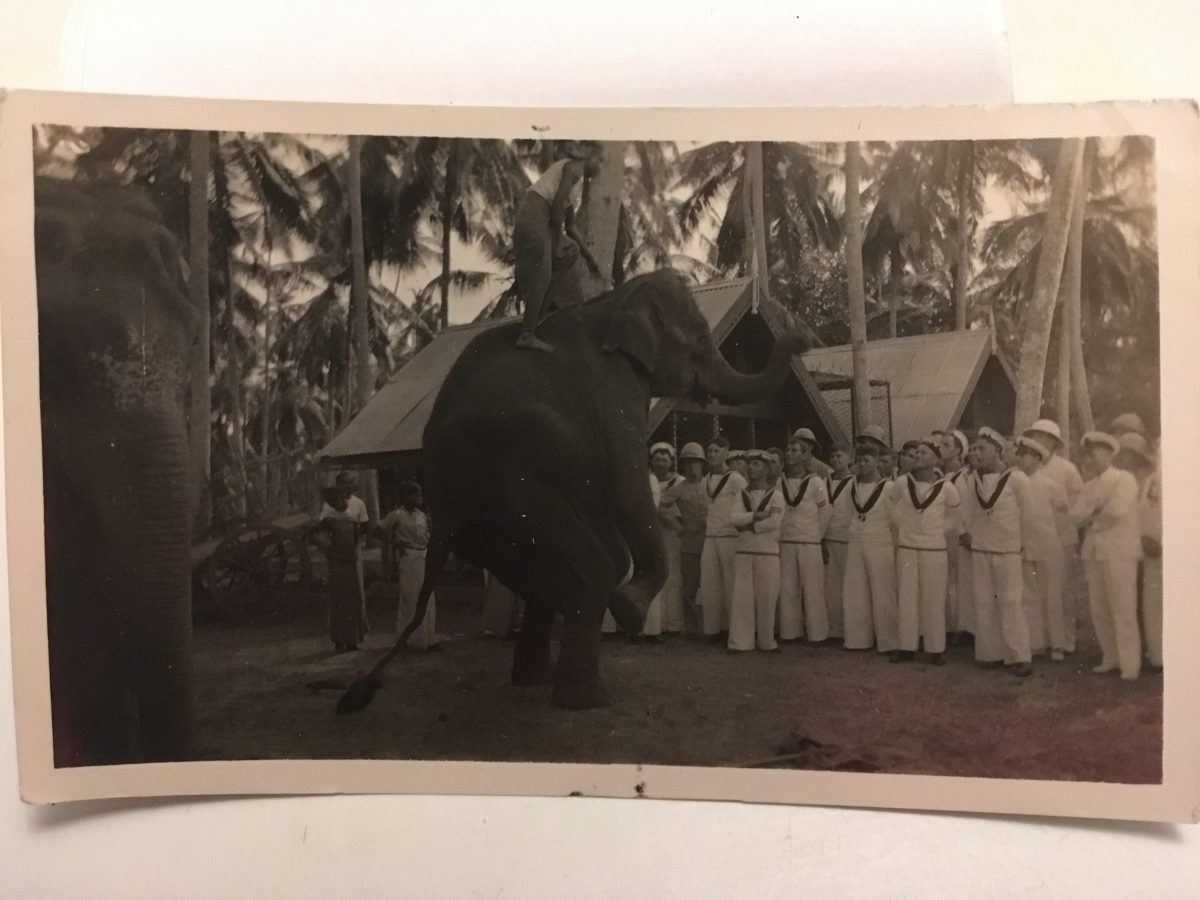
It’s been a funny few weeks. Having moved back to freelance life after a decade of commissioning, I’ve been frantically busy, but I’ve also found a few spare moments to embark on the long-overlooked task of sorting through the piles of stuff that came to me when my grandparents passed away. Only a few days in, amongst the boxes of dusty postcards and family snaps, I found treasure – my grandfather’s naval records from the 1920s and 1930s, including photos from his time in Ceylon.
Since gaining independence in 1948 and rebranding itself as Sri Lanka in 1972, the island formerly known as Ceylon has seen seismic changes – literally in the case of the deadly tsunami that struck the eastern and southern coastlines in 2004. The self-described Pearl of the Orient has been gripped by civil war and upheaval. It has been changed dramatically by tourism and runaway modernisation. But flicking through my grandad’s cigarette card-sized, black-and-white photographs, I was struck not just by what has changed, but also by what has stayed the same.
Discovering this time capsule came at a serendipitous time – I’m poised to start work on a series of articles about Sri Lanka, part of a push to remind people that this spectacular, complex destination is still open for business, and in urgent need of support from international tourists to help the economy rebuild after the terrorist attacks on 21 April 2019.
On a personal note though, these frozens moments in time just reinforced my belief that I was born in the wrong era, and should rightly have done my travelling in the interwar years, to a backdrop of gypsy jazz beneath whirling ceiling fans, when the world was still fresh and waiting to be discovered.

The photographs create a patchy record, taken on moments of shore leave between naval engagements, but they paint an evocative picture of Sri Lanka before foreign travel for the masses became a reality. Some iconic landmarks from 1928 are still standing today, like the former General Post Office on Janadhipathi Mawatha in Fort, returned to its original 1890s brilliance following a major restoration in 2016. The only thing that has conspicuously changed is the addition of some greenery along the facade, and a more modern fleet of motor vehicles lined up out front.

Other areas of Sri Lankan life have changed beyond recognition. Covered bullock carts once transported goods right into the heart of the capital, vastly outnumbering the handful of automobiles that plied the streets of the British-era Fort. Today, Colombo is a frantic, modern motor city, and ox-carts have been relegated to the countryside, if they are seen at all. It must have been quite something to experience Colombo when cars were rare and the air was clean, free from the noise and diesel pollution that characterises the city today.

I was also struck by the realisation that the interwar years were, for the British working classes, a time of opportunity, before the gathering storm clouds of the Second World War became fully apparent. The old cliche of ‘Join the Navy, see the world’ was a genuine proposition. For my grandfather, raised in a back-to-back terraced house in the Midlands, enlisting as a navy stoker was an opportunity to not just leave England for the first time, but to literally circle the globe – or at least the bits of it allied to the British Empire.
His travels took him to Scarpa Flow in Scotland, and on to Malta, Suez, Aden, Bombay, Ceylon, Kolkata, Malaya, Singapore, Hong Kong and finally mainland China and Japan. At that time, this was an experience only open to multi-millionaires, merchant seamen, or the enlisted men of the Royal Navy. When conflict finally broke out, my grandfather’s war was spent not on the battlefields of Europe, but patrolling the Yangtze River under Japanese fire, as violence spread out to the Pacific.
There’s a powerful sense of time and place in these pictures of sailors and elephants. Despite the obvious gap in wealth between the British overlords of Ceylon and the local population, the experience back home for most of the sailors in my grandad’s unit was not all that different to that of the Sri Lankans they were meeting for the first time. Both lived with limited means, beholden to hierachies of class, wealth, rank and power they had little ability to influence or control.

Nevertheless, there was time for leisure – another comparatively new development for the working classes – while on shore leave, as demonstrated by this brochure on the dagobas (stupas) of Sri Lanka’s ancient cities, printed in 1928 and found in almost mint condition amongst my grandad’s naval papers. Tourism is, of course, as old as the hills, but there was a time when the world’s most famous sights were full of local people going about their business, rather than crowds of tourists snapping selfies.
I’ll write another day about my grandad’s war experiences, and his near miss in the Panay incident that dragged America into war with Japan, but one paper found amongst his naval files had a particular resonance: a notification of the declaration of war from 3rd September 1939.

It’s hard to imagine what goes through your mind when instructed, on pain of court-martial, to immediately start fighting people you have never met, over politics you know nothing about, because of a crisis you played no part in creating. It’s even harder to imagine what that would mean to someone thousands of miles from a war unfolding on the doorstep of the family and home they left behind.
바이비트 (Bybit) 소개
바이비트(Bybit)는 빠르게 성장하고 있는 암호화폐 거래소 중 하나로, 이용자들에게 다양한 거래 옵션과 함께 안전하고 효율적인 거래 환경을 제공합니다. 2018년에 설립된 이 플랫폼은 선물 거래와 마진 거래에 주력하며, 전 세계의 암호화폐 트레이더들에게 널리 알려져 있습니다.
주요 특징
1. 사용자 친화적인 인터페이스: 바이비트는 직관적인 UI/UX를 제공하여 초보자부터 전문가까지 쉽게 사용할 수 있는 플랫폼입니다. 거래 차트와 도구들이 잘 배치되어 있어 실시간 시장 분석이 용이합니다.
2. 고속 거래 실행: 바이비트는 높은 성능의 서버와 기술 인프라를 갖추고 있어, 거래 체결 속도가 빠릅니다. 이는 트레이더가 빈번한 거래를 필요로 하는 암호화폐 시장에서 큰 장점이 됩니다.
3. 레버리지 거래: 바이비트는 최대 100배의 레버리지를 제공합니다. 이는 트레이더가 적은 자본으로도 큰 규모의 거래를 할 수 있게 해주지만, 동시에 높은 리스크를 동반하므로 주의가 필요합니다.
4. 안전성: 바이비트는 고객 자산의 안전을 위해 여러 가지 보안 조치를 취하고 있습니다. 이중 인증(2FA)과 지갑 자산의 오프라인 저장 등 다양한 보안 기능이 제공되어 해킹 등의 위험에 대비하고 있습니다.
5. 모바일 거래: 바이비트는 모바일 앱을 제공하여 언제 어디서나 거래할 수 있는 flexibility를 제공합니다. 이는 바쁜 일상 속에서도 트레이더가 시장의 변화를 실시간으로 파악하고 대응할 수 있게 해줍니다.
거래 가능한 암호화폐
바이비트에서는 비트코인(BTC), 이더리움(ETH), 리플(XRP), 라이트코인(LTC) 등 다양한 주요 암호화폐를 거래할 수 있습니다. 또한, 유망한 알트코인에 대한 거래도 지원하여 트레이더들이 다양한 투자 기회를 누릴 수 있습니다 bybit
커뮤니티와 지원
바이비트는 활발한 사용자 커뮤니티와 지원 시스템을 운영하여 거래자들에게 필요한 정보를 제공합니다. 공식 웹사이트와 소셜 미디어를 통해 업데이트와 교육 자료가 지속적으로 제공되며, 고객 지원팀이 여러 언어로 문의를 처리합니다.
결론
바이비트는 다양한 기능과 안전성을 갖춘 암호화폐 거래소로, 많은 트레이더들에게 인기를 얻고 있습니다. 초보자와 경험이 풍부한 트레이더 모두에게 유용한 플랫폼으로, 암호화폐 거래의 세계에 발을 내딛고자 하는 이들에게 강력하게 추천할 수 있습니다. 그러나 모든 거래에는 리스크가 따르므로 충분히 학습하고 신중하게 접근하는 것이 중요합니다.